Most trekkers at the Toubkal refuge look up at one summit. Experienced hikers look the other way too, towards Ouanoukrim, the second-highest massif in North Africa. Its twin tops, Timesguida and Ras n'Ouanoukrim, both rise above 4,080 m and offer wilder terrain, fewer people and one of the best views of Toubkal itself. This guide explains the Ouanoukrim climb, the route, difficulty and how to add it to your trek.
What is Ouanoukrim?
Ouanoukrim is a high mountain massif in the High Atlas of Morocco, directly south-west of the Toubkal refuge. Its two main summits are Timesguida (about 4,089 m), the second-highest peak in North Africa after Toubkal (4,167 m), and Ras n'Ouanoukrim (about 4,083 m). Both are usually climbed in one day from the Toubkal refuge via the col Tizi n'Ouagane.
| Peak | Altitude (approx.) | Rank in North Africa | Usual base |
|---|---|---|---|
| Toubkal | 4,167 m | 1st | Toubkal refuge |
| Timesguida (Ouanoukrim) | 4,089 m | 2nd | Toubkal refuge |
| Ras n'Ouanoukrim | 4,083 m | 3rd | Toubkal refuge |
| Akioud | ~4,030 m | Among the 4,000 m peaks | Toubkal refuge |
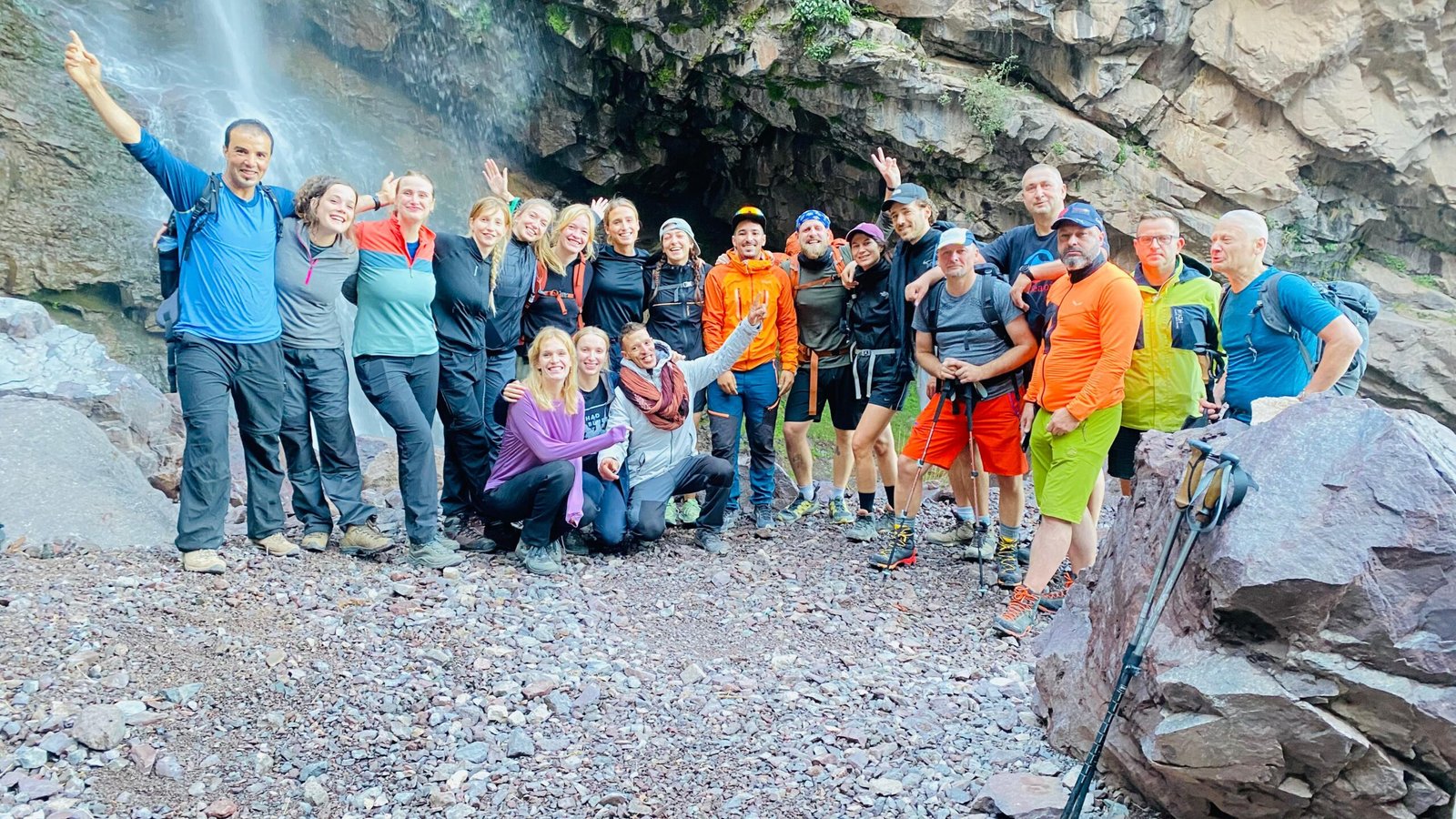
The Ouanoukrim climb: route overview
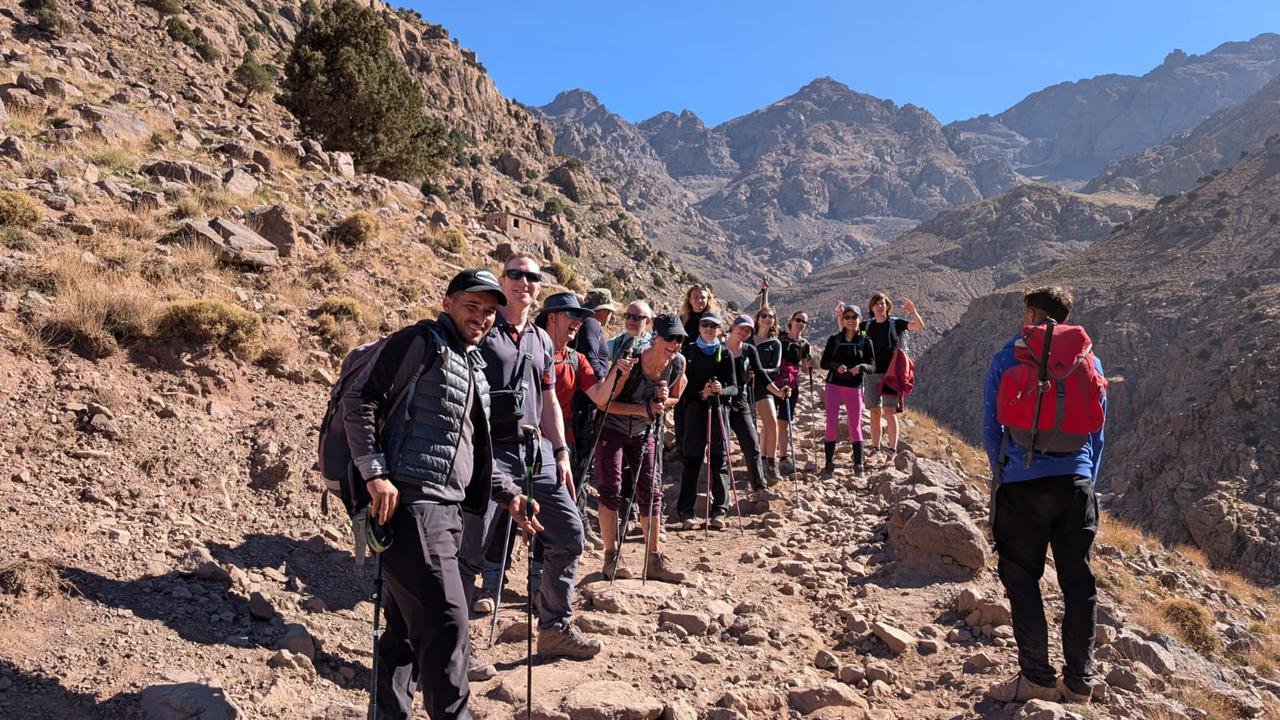
The standard route starts at the Toubkal refuge (about 3,200 m) and is typically done as a day trip:
- Leave the refuge early and head south up the valley towards the Tizi n'Ouagane col.
- Climb steep scree to Tizi n'Ouagane (around 3,750 m). This is a long, steady effort.
- Turn towards the summits: follow the ridge and slopes to Ras n'Ouanoukrim, then continue along the connecting ridge to Timesguida if conditions and the group allow.
- Enjoy the panorama over Toubkal, the Ouanoums valley and, on clear days, towards the Anti-Atlas and Jbel Siroua.
- Descend to the refuge by the same route, carefully on the loose scree.
Expect 6–8 hours for the round trip from the refuge, depending on fitness, conditions and whether you climb both summits.
How hard is Ouanoukrim compared with Toubkal?
Ouanoukrim is generally considered more demanding than the normal Toubkal route. The path is less trodden, the scree is steep and loose, and the ridge between Ras n'Ouanoukrim and Timesguida involves some easy scrambling on rock, where you use your hands. In good summer conditions, fit and sure-footed hikers manage it with a guide. In winter and spring, snow and ice turn it into a proper mountaineering climb with crampons, ice axe and sometimes a rope.
- Fitness: similar to or greater than Toubkal summit day.
- Technical level: easy scrambling on the ridge in dry conditions.
- Exposure: some sections feel airy; a head for heights helps.
- Navigation: fewer marked paths than Toubkal; a licensed guide is essential.
Why add Ouanoukrim to your trek?
For trekkers with a spare day at the refuge, Ouanoukrim brings three big benefits. First, acclimatisation: climbing to over 4,000 m the day before Toubkal makes the main summit easier. Second, solitude: you may share the ridge with only a few other groups. Third, the view: from Ouanoukrim you see Toubkal's full western face and the huge cirques around the refuge, a perspective you do not get from Toubkal itself.
How to fit Ouanoukrim into an itinerary
| Day | Plan |
|---|---|
| 1 | Marrakech – Imlil – Toubkal refuge (5–6 h walk) |
| 2 | Ouanoukrim climb (Ras and/or Timesguida), back to the refuge |
| 3 | Toubkal summit, descent to Imlil, return to Marrakech |
This is essentially our 3-day Toubkal summit trek with the middle day used for Ouanoukrim. Longer programmes such as the 6-day Toubkal trek or the Toubkal circle trek via Lac d'Ifni can also include it if the group is strong and the weather cooperates. Ask our team via the contact page to add it.
Best season for the Ouanoukrim climb
- June to October: best period in dry conditions; scree and rock are free of snow.
- November and April–May: snow likely on the upper slopes and ridge; winter equipment may be needed.
- December to March: winter mountaineering only, for experienced climbers with a qualified guide.
What to take for Ouanoukrim
- Sturdy boots with good grip for scree and rock
- Helmet recommended for the scrambling section and stonefall risk
- Warm layers, windproof jacket, hat and gloves
- 2 litres of water, lunch and snacks
- Trekking poles for the long scree descent
- Crampons and ice axe if your guide confirms snow or ice
Other high peaks around the Toubkal refuge
The Toubkal refuge sits in the middle of the highest cluster of mountains in North Africa, and Ouanoukrim is only one of several summits above or close to 4,000 m that can be reached from it. Akioud (around 4,030 m) and Afella (around 4,040 m) rise to the west and south of the refuge, while Tibherine and other secondary tops line the ridges. These peaks are climbed far less often than Toubkal, usually by experienced groups spending several nights at the refuge or on dedicated mountaineering programmes, often in spring with snow. They require good fitness, steady footing on loose ground and a guide who knows the routes well. For most trekkers, Ouanoukrim is the most rewarding second summit: high, accessible in one day and with a superb view of Toubkal.
Safety notes
Ouanoukrim is quieter than Toubkal, which is part of its charm but also means fewer people around if something goes wrong. Climb only with a licensed guide, start early, set a turnaround time and do not hesitate to stop at Ras n'Ouanoukrim if the ridge to Timesguida looks icy or the weather changes. Mountain weather in the High Atlas can shift quickly, with strong wind on the ridges and summer storms in the afternoon. For background on the High Atlas range, see the High Atlas article on Wikipedia.
Ouanoukrim and Toubkal on the same day?
Very fit and well-acclimatised mountaineers sometimes link Ouanoukrim and Toubkal in one long day, but this is a demanding outing of 10 hours or more on steep, loose ground. For most trekkers it is far better to spread the two summits over two days: you enjoy each one more, acclimatise progressively and reduce the risk of accidents caused by fatigue on the descent. If you are interested in a bigger mountain challenge, tell us your experience and we will suggest a realistic plan.
Key takeaways
- Ouanoukrim's twin summits, Timesguida (~4,089 m) and Ras n'Ouanoukrim (~4,083 m), are the second and third highest peaks in North Africa.
- The climb starts at the Toubkal refuge via Tizi n'Ouagane and takes 6–8 hours return.
- It is harder and more rugged than the normal Toubkal route, with easy scrambling.
- Best from June to October, with a guide and an extra day at the refuge.
Planning both summits? Read our Toubkal summit day timeline and our Toubkal circuit trek guide to design the perfect High Atlas week.